
Container Escape and Cloud-Native Virtualization Security: Strengthening Isolation in Shared-Kernel Environments

In this blog, we will explore the nature of container escapes in cloud-native environments, their root causes, the systems at risk, and the real-world consequences of these vulnerabilities. We will also cover how to audit your systems, immediate remediation steps, and long-term security best practices. As enterprises increasingly adopt Docker, Kubernetes, and other container orchestration […]
Mythos AI and Linux Kernel Security: How Frontier AI Models Are Transforming Cybersecurity
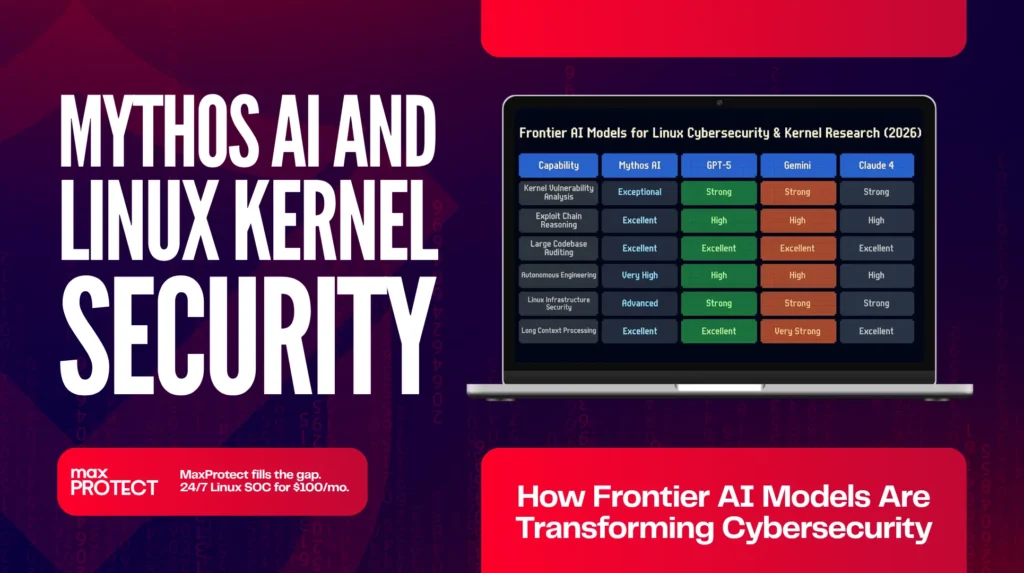
Artificial intelligence is rapidly reshaping the cybersecurity industry, but its most disruptive impact is now emerging within Linux infrastructure security and kernel-level vulnerability research. As organizations increasingly rely on Linux-powered cloud infrastructure, container orchestration platforms, and enterprise servers, advanced AI systems are beginning to redefine how vulnerabilities are discovered, analyzed, and exploited. One of the […]
Copy Fail Vulnerability: Linux Root Exploit — Patch Now

In late April 2026, the cybersecurity community was impacted by the public disclosure of one of the most significant and widespread local privilege escalation vulnerabilities in recent Linux history. Officially tracked as CVE-2026-31431 and commonly referred to as Copy Fail, this flaw enables unprivileged local users on affected Linux systems to obtain full root access […]
AI-Powered Cyber Attacks in 2026: The Rise of Intelligent and Automated Threats

What Are AI-Powered Cyber Attacks? AI-powered cyber-attacks are an emerging threat in which attackers utilise AI to automate, adapt, and execute attacks in real time. These attacks are not like the traditional cyber threats, which adapt tactics dynamically, but can target multiple systems at once. AI-powered cyber attacks in 2026 are categorised into these four […]