
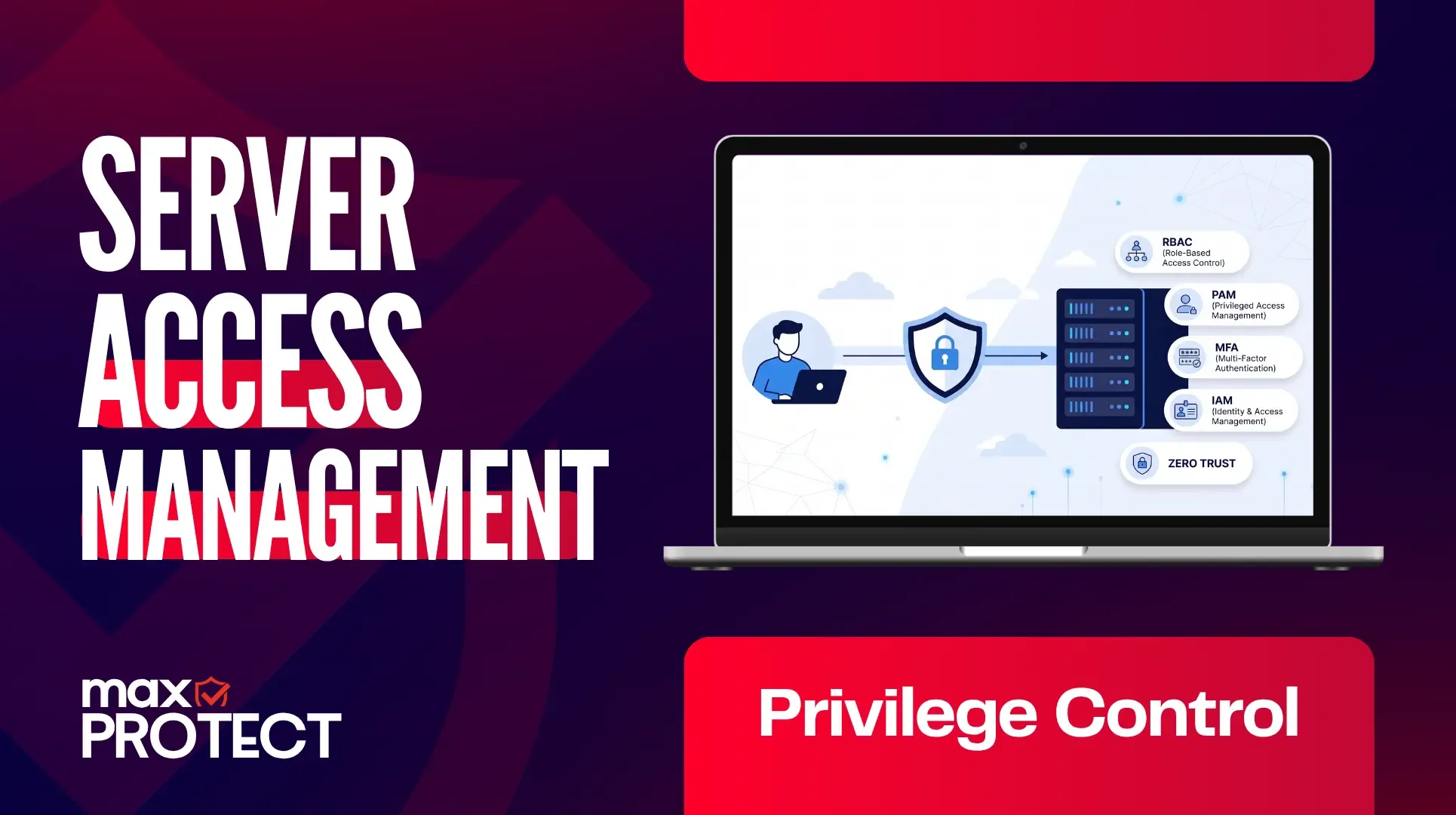
Server Access Management (SAM) is a foundational cybersecurity discipline that governs how users, administrators, applications, and automated services authenticate to servers and what actions they are authorized to perform after authentication. In modern enterprise environments, servers host critical business applications, databases, identity services, virtual infrastructure, and cloud workloads. Because these systems store sensitive information and provide essential business functions, they are primary targets for cybercriminals.
Traditional security models often relied on perimeter defenses, assuming that users inside the network could be trusted. Modern attacks have demonstrated that this assumption is no longer valid. Stolen credentials, insider threats, ransomware operators, and supply chain compromises frequently exploit excessive privileges rather than software vulnerabilities. Consequently, organizations must implement strict privilege controls based on the principles of least privilege, Zero Trust, continuous authentication, and comprehensive auditing.
Why Server Access Management Matters
As organizations scale, the number of servers, privileged identities, service accounts, automation tools, and cloud resources grows rapidly. Without centralized governance, access rights become inconsistent and difficult to manage. This leads to privilege creep, orphaned accounts, shared credentials, and unmanaged SSH keys. A mature server access management strategy ensures that every access request is authenticated, authorized, monitored, and logged while reducing the organization’s attack surface.
Core Principles of Strict Privilege Control
Least Privilege ensures users receive only the permissions required for their duties. Separation of Duties prevents one individual from controlling an entire critical process. Need-to-Know limits access to sensitive information. Zero Trust assumes no user or device is trusted by default and continuously verifies every access request.
How to Enforce Privilege Controls at Scale
Large enterprises enforce privilege controls using centralized Identity and Access Management, Privileged Access Management, Role-Based Access Control, Multi-Factor Authentication, Just-In-Time administration, and continuous auditing. Automation ensures policies remain consistent across thousands of servers and hybrid cloud environments.
Auditing and Monitoring Privileged Activities
Every privileged activity should generate logs that record authentication events, privilege elevation, configuration changes, command execution, account creation, and administrative sessions. Centralized SIEM platforms correlate these events to identify suspicious behaviour, lateral movement, and policy violations.
Server Access Management Best Practices
Organizations should eliminate shared administrator accounts, regularly review access rights, rotate credentials and SSH keys, protect service accounts, enforce MFA, record privileged sessions, integrate logs with SIEM, and periodically validate that permissions remain aligned with business responsibilities.
Conclusion
Server Access Management should be treated as a continuous governance process rather than a one-time configuration task. Strong identity verification, least privilege, privileged access management, centralized auditing, and periodic access reviews collectively reduce the likelihood of credential abuse and privilege escalation while supporting regulatory compliance and operational resilience.